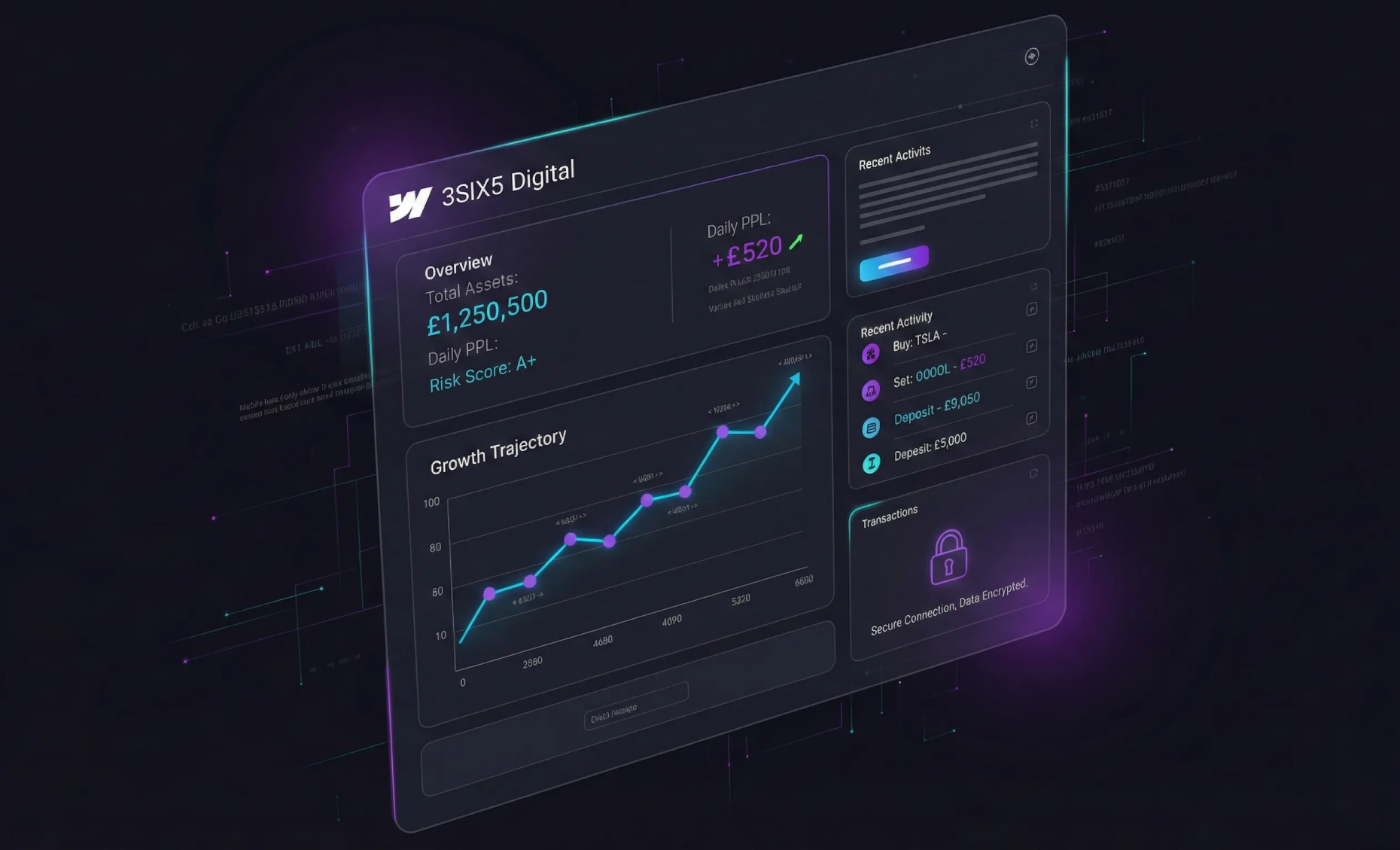
FinTech platforms handle sensitive customer and financial data, which makes security non-negotiable. Webflow sites are hosted on AWS with ISO 27001 compliance, SSL built-in, and enterprise-grade DDoS protection. This means your website benefits from the same infrastructure trusted by the world’s most secure organisations.
Fully Customisable Experiences
Every FinTech brand is unique – from challenger banks to payment processors. Webflow allows complete design flexibility without reliance on rigid templates or plugins. With bespoke CMS structures and custom code, we deliver scalable sites tailored precisely to your products, users, and regulatory requirements.
Lightning-Fast Performance
In financial services, speed translates directly to trust. Webflow’s global CDN ensures rapid load times across key markets, from London to Singapore. Optimised performance not only improves user confidence but also boosts SEO, helping your FinTech stand out in a competitive landscape.
Compliance-Ready Infrastructure
Whether your organisation must meet FCA guidelines, GDPR, or SOC2 standards, Webflow provides a solid foundation. Combined with our bespoke governance setup – from cookie compliance to secure user flows – your site is built to meet industry regulations without compromising experience.
Agile Development & Scaling
FinTech companies need to move fast. With Webflow, we can prototype, launch, and iterate at speed – no waiting on developer bottlenecks or fragile plugin stacks. As your product grows, we can scale features seamlessly, integrating dashboards, customer portals, and APIs without rebuilding your core platform.
The Reality of Scaling a Fintech Startup
FinTech products are not simple brochure websites. They are growth engines that need to support:
Rapid product iteration
Investor and customer trust
High traffic spikes during launches or campaigns
Security and compliance expectations
Seamless integration with third-party platforms
At the idea or MVP stage, WordPress can feel like the fastest option. But as traction grows, cracks start to appear.
1. Security and Compliance Become a Bottleneck
FinTech brands handle sensitive data, even when the website itself is not processing transactions.
Common WordPress challenges include:
Heavy reliance on third-party plugins
Frequent security updates and patching
Increased risk surface from themes and extensions
Ongoing maintenance overhead
For regulated industries, security confidence is not optional. Many FinTech teams find WordPress demands constant vigilance just to stay compliant and stable.
2. Performance Directly Impacts Trust
In FinTech, speed equals credibility. A slow or unstable site damages trust instantly.
WordPress performance issues often stem from:
Plugin-heavy setups
Shared hosting environments
Bloated themes
Complex caching configurations
As traffic grows, performance tuning becomes increasingly technical and fragile. This can slow marketing teams down and increase reliance on developers for minor updates.
FinTech markets are crowded. Design clarity and storytelling are critical.
WordPress limitations typically include:
Rigid theme structures
Heavy custom development for bespoke layouts
Design updates tied to developer availability
Difficulty maintaining consistency at scale
As FinTech startups mature, they need complete visual control without breaking the site or waiting weeks for simple changes.
4. Marketing Teams Need Independence
High-growth FinTech companies rely on marketing velocity.
WordPress can slow teams down because:
Complex editors vary by theme
Layout changes risk breaking responsiveness
SEO updates often rely on plugins
Version control is inconsistent
Modern teams expect designers and marketers to ship landing pages, campaigns, and experiments without engineering bottlenecks.
5. Scaling Architecture Becomes Fragile
As integrations increase, WordPress often becomes harder to manage.
Typical challenges include:
Integrating CRMs, analytics, and personalisation tools
Supporting internationalisation and localisation
Managing staging and deployment safely
Handling multi-product or multi-brand structures
At scale, WordPress can feel like a patchwork rather than a platform.
What Fintech Startups Look for Next
When FinTech companies move on from WordPress, they usually prioritise:
Strong security by default
Clean, fast, globally optimised hosting
Full design freedom without plugins
Marketing team autonomy
Scalable CMS architecture
Reliable integrations with modern tools
This is where platforms like Webflow start to make sense for scaling teams.
WordPress Is Not Bad, It Is Just Outgrown
WordPress still has a place. It can be useful for:
Early MVPs
Content-heavy blogs
Budget-constrained projects
But for Fintech startups chasing rapid growth, investor confidence, and global scale, the platform often becomes a limiting factor rather than an enabler.
Further Resources
For a deeper dive, view our full comparison; Webflow Vs Wordpress which is updated for 2026 and ready to advise Fintech companies.
Fintech web design, WordPress vs Webflow, Fintech startup websites, Scalable websites, High-growth SaaS design, Fintech UX
Share this article!
Need Expert Help?
Send us a enquiry
Thanks for signing up!
Oops! Something went wrong while submitting the form.